Building community for early career researchers
The Academy of Criminal Justice Sciences doctoral summit playbook
The doctoral journey can be isolating. Early career researchers often navigate complex academic landscapes without a roadmap, wondering if their struggles are unique or if there’s a “right” way to build a career.
The Academy of Criminal Justice Sciences (ACJS) recognized this challenge and created their annual doctoral summit—a dedicated space where doctoral students can connect with peers, learn from experienced scholars, and gain clarity on their career paths. As one attendee, Maya Moritz, described it: “a wonderful and important growth opportunity that allows you to meet researchers and peers you maybe wouldn’t encounter in your day-to-day.”
This article examines the ACJS doctoral summit as a case study, offering actionable guidance for societies and associations, which can be applied across different research areas, looking to create similar initiatives. Take a look at the page dedicated to testimonials from the summit here.
Why doctoral summits matter
Doctoral students face unique pressures: navigating uncertain career paths, building professional networks from scratch, and understanding the unwritten rules of academia—often feeling isolated even within their own institutions.
Dedicated doctoral summits address these challenges by creating community among peers, providing mentorship from experienced scholars, offering practical career guidance, and expanding networks beyond institutional boundaries.
The impact is clear in participants’ voices. Ebenezer Omotosho described the ACJS Summit as “a lively and truly enriching experience” for “a doctoral student seeking clarity, community, and mentorship.” For societies, these summits strengthen member engagement, build future leadership, and enhance reputation as career-focused organizations.
Post information
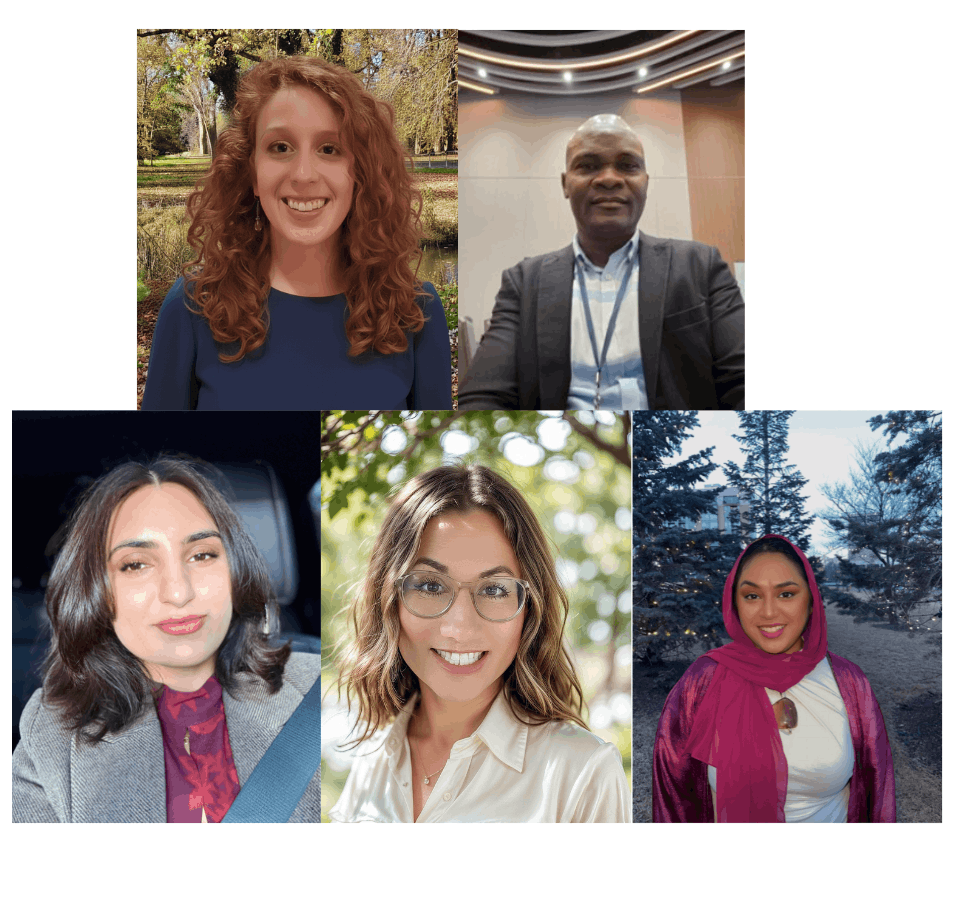
Past ACJS attendees, clockwise from left to right: Maya Moritz (University of Pennsylvania), Ebenezer Omotosho (University of Wisconsin-Milwaukee), Alvi Ali (University of Nebraska at Omaha), Meghan Mitchell (University of North Dakota) and Sarbjeet Kaur (Mitchell College).
What makes the ACJS Summit work?
The ACJS Summit succeeds through six core principles:
Peer-to-peer learning: Alvi Ali emphasized the value of “being in the same room with peers who are at similar stages in their doctoral programs,” having “meaningful conversations about our dissertations, the challenges of graduate school, and the future of criminal justice.”
Honest, candid mentorship: Rather than polished presentations, the summit prioritizes authentic conversations. Alvi highlighted sessions where “professors who once stood where we are now…were candid about the challenges they faced and openly shared how they navigated those barriers.”
Inclusive Design: With “truly something in the program that everyone can benefit from,” the summit addresses diverse career paths and challenges – Alvi added.
Building a network that lasts: Past ACJS DS Alumni have come forward with high regards to the summit. Meghan Mitchell, University of North Dakota, stated: “I was part of the inaugural doctoral summit and it has bought me so much joy connecting with students from all of the cohorts. The legacy and lasting friendships have meant so much to me professionally and personally.”
Building foundations: Another past ACJS DS Alumni remarked on the impact it had on their academic journey. Sarbjeet Kaur of Mitchell College commented: “It provided me with meaningful mentorship, practical guidance on navigating the job market, and connections that have directly shaped my career trajectory.
Practical, actionable content: The summit delivers what Alvi described as “a crash-course style experience” where “facilitators pack a significant amount of valuable information into a short period of time.” Participants leave with concrete strategies, like Alvi’s plan to “prioritize using LinkedIn to connect with professionals.”
The result? As Maya Moritz reflected: “With the insights I’ve gained from the summit, I will certainly be moving forward with the knowledge that my career is a marathon, not a sprint.”
Tips to launching your own doctoral summit, from Heather Pfeifer of ACJS
Build institutional commitment from leadership and secure meaningful financial support
Secure buy-in and ongoing fiscal support from your association’s executive board or governing body. Commit to covering the full cost of participation – conference registration, hotel accommodations, and meals. Financial barriers disproportionately affect students from marginalized backgrounds and those without robust institutional funding. By removing these obstacles, you ensure diverse participation and signal that your association genuinely values emerging scholars. Consider partnering with academic publishers who house your academic journals or establishing dedicated scholarship funds to help sustain this investment.
Designate a dedicated committee (ideally including senior scholars, junior faculty, and current doctoral students) to oversee the program. This will ensure the curriculum reflects shared experiences across different career stages and addresses the needs of emerging scholars.
Establish clear eligibility and selection processes
Develop transparent application requirements that target advanced doctoral students (typically those who have completed their coursework and comprehensive exams). This population is at highest risk for attrition and has the most immediate need for job market preparation.
Create a rubric that prioritizes diversity, equity, and inclusion for both participants and program type (e.g., geography, size, Carnegie classification). This will insure a competitive but equitable selection process while building a diverse cohort that enriches the learning experience for all participants.
Design intensive, dual-focused programming
Develop 10-15 hours of professional development programming that runs concurrently with your annual conference, balancing technical and intra-personal skill-building. “Soft-skills” are particularly important for doctoral students. Research consistently shows that doctoral attrition is rarely due to academic ability. Students need support navigating the hidden curriculum and personal challenges that programs don’t formally teach but significantly impact success and retention.
Technical skills curriculum should include dissertation completion strategies and writing support; data analysis and presentation skills; pedagogical training and classroom management; academic job market preparation; and, non-academic career pathways and translating academic skills.
Interpersonal skills curriculum should address work-life balance and optimizing mental health and wellness; navigating imposter syndrome and cultivating academic identity; and, building and maintaining professional networks.
Create structured networking opportunities
Isolation is the primary driver of attrition, particularly during the dissertation phase when students complete coursework and transition to independent research. Students consistently report that connecting with peers facing similar challenges and building relationships with established scholars provides crucial professional and emotional support.
Build dedicated time into your agenda for peer-to-peer connections and mentorship with senior scholars. This can be achieved through small group discussions during workshops, cohort-building activities, mentor matching, and informal social events.
Address realities beyond the degree
Students report significant gaps in their knowledge about what to expect when they get hired in their first academic job or what career opportunities exist outside of academia. Given the decline in tenure-track positions available, it is important doctoral students learn about the transferability of their skills in both academic and non-academic settings.
Build curriculum that specifically addresses the realities of heavy workloads pre-tenure, institutional politics, and confronting workplace challenges related to identity.
Implement continuous assessment and iteration
The ACJS Summit evolved from 9.5 to 12.5 hours of programming based on student requests for additional content. Regular assessment has also helped to identify which sessions resonated the most and where students need additional support. This has enabled the Summit’s curriculum to stay relevant and address emerging needs.
Collect feedback from each cohort through surveys and open-ended questions about program effectiveness, gaps in coverage, and suggestions for improvement. Use this data to refine your curriculum annually. It will also demonstrate to students that their voice matters and that your association is committed to continuous improvement.
Getting started: your action plan
Assess needs: Survey doctoral students about their biggest challenges and identify gaps in existing support.
Assemble your team: Include a coordinator, current doctoral students, senior scholar mentors, and society leadership support.
Start small: Consider a half-day or one-day pilot event in conjunction with your annual conference. Gather extensive feedback and iterate.
Secure the right facilitators: Look for mentors who remember the doctoral experience, are willing to share challenges honestly, represent diverse paths, and can facilitate discussion rather than lecture.
Plan for sustainability: Consider funding models, coordination resources, and how to maintain momentum year after year.
Common pitfalls to avoid: Don’t make it too lecture-heavy, don’t overlook informal networking time, don’t try to cover too much too quickly, and don’t neglect follow-up.
Measuring success


Success shows up in immediate satisfaction (the ACJS summit receives descriptions like “wonderful,” “enriching,” and “highly recommend”), behavioral outcomes (participants implementing learned strategies), and long-term impact (career progression, continued society engagement, and participants becoming future mentors).
Sometimes the most powerful indicators are the stories themselves. As Maya reflected: “The summit allows you to ask the sorts of questions that will allow you to flourish.”
Conclusion
The ACJS doctoral summit demonstrates that when societies invest in their early career members, the returns are substantial. Participants don’t just gain skills or contacts—they gain clarity, confidence, and community.
You don’t need unlimited resources or a perfect plan. You need commitment to supporting your doctoral students, willingness to create authentic spaces for connection, and dedication to iterating based on feedback.
The doctoral students in your field are navigating complex journeys right now. A summit like ACJS’s can be the compass that helps them find their way—and the community that reminds them they’re not traveling alone.
Where to next?
To hear from alumni and the 2026 cohort, we recommend visiting the dedicated testimonials page.
The Academy of Criminal Justice Sciences Doctoral Summit Testimonials
Where to next?
Learn more about the ACJS doctoral summit and begin planning your own transformative event for early career researchers.