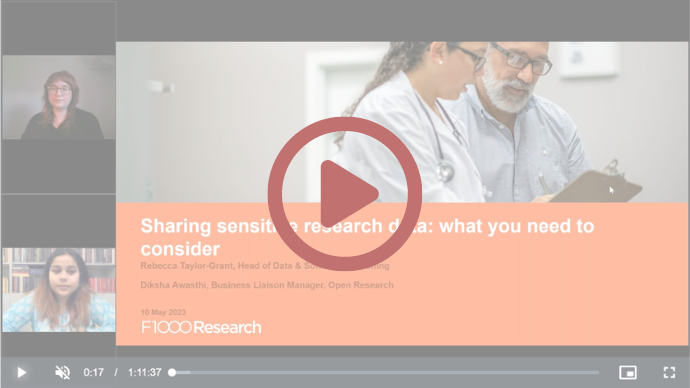
Sharing sensitive research data: what you need to consider
What the event covered
Many publishers, including F1000, encourage authors to share their data as openly as possible to facilitate reuse and support greater transparency of research outcomes. For researchers who have worked with human research participants, however, opening up their datasets may not be so simple.
This webinar introduces some of the key elements that researchers should consider when thinking about sharing sensitive data safely.
The legal and ethical implications of open data sharing
Approaches to safer sharing
About the speaker
Dr. Rebecca Grant is Head of Data & Software Publishing at F1000. Her work in academic publishing has focused on the implementation of research data policies across journals and the development training and support for researchers to encourage best practices in data management and sharing. She has a background in data management for the humanities and social sciences and was previously based at the Digital Repository of Ireland and the National Library of Ireland. Her doctoral thesis explored the connections between archival theory and research data management practice.
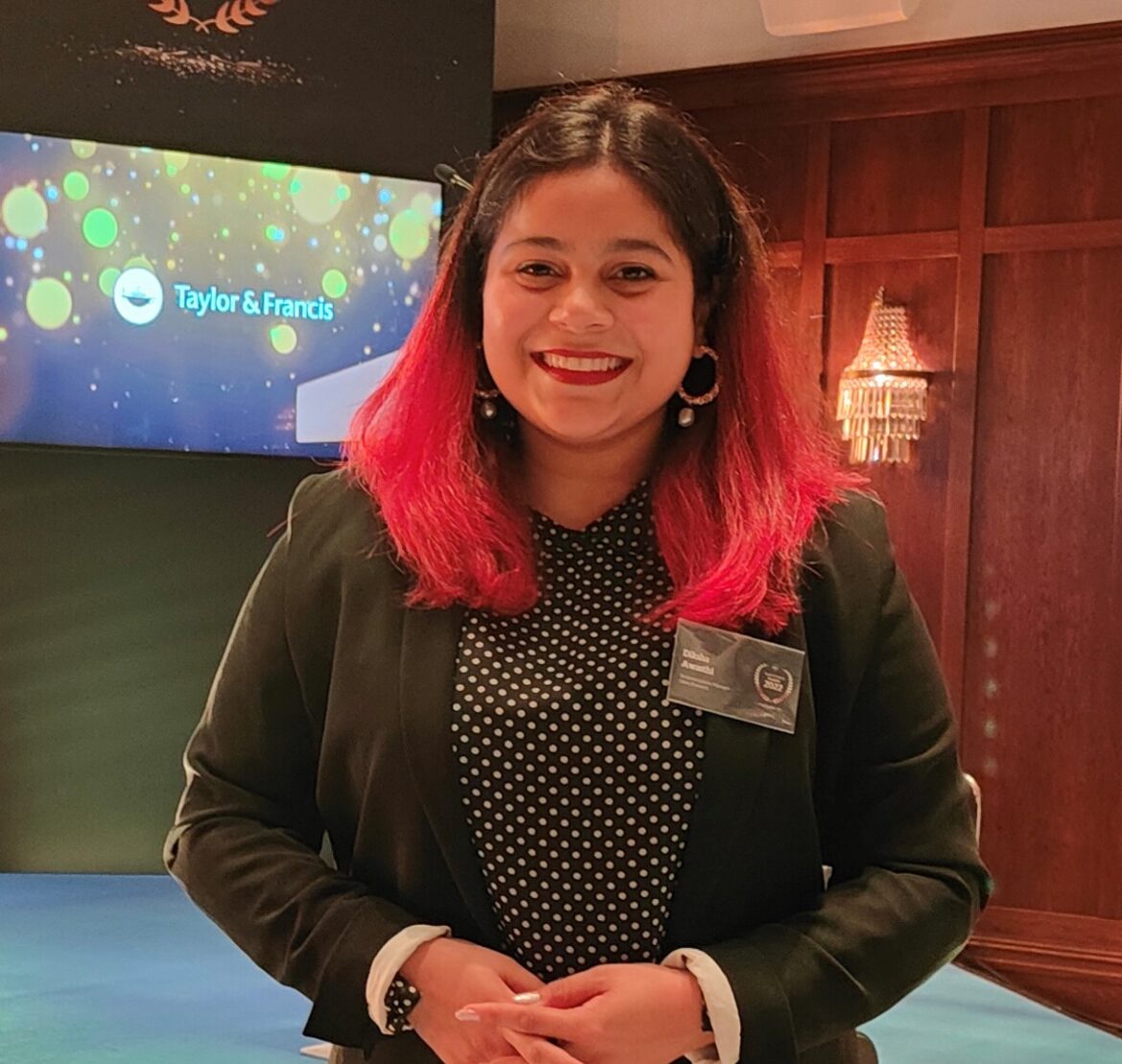
Diksha Awasthi’s role is focused on nurturing partnerships and providing author support within India region. Prior to joining Taylor & Francis, Diksha worked as a Fulbright Scholar and teaching assistant at University of Utah. She has over 4 years of experience working in the education sector.
This session focuses on preparing datasets for sharing, best practices for repositories, and writing Data Availability Statements. Participants will learn ethical and legal aspects of data sharing and strategies for handling sensitive data.
This course explores open research models, their adoption by stakeholders, and their impact on publishing workflows. Participants will learn ethical considerations and practices for engaging in open science and speculate on future publishing trends.

 data sharing